The beauty is in the details.
Discover how texture, light, and patient layers give a painting its quiet character.
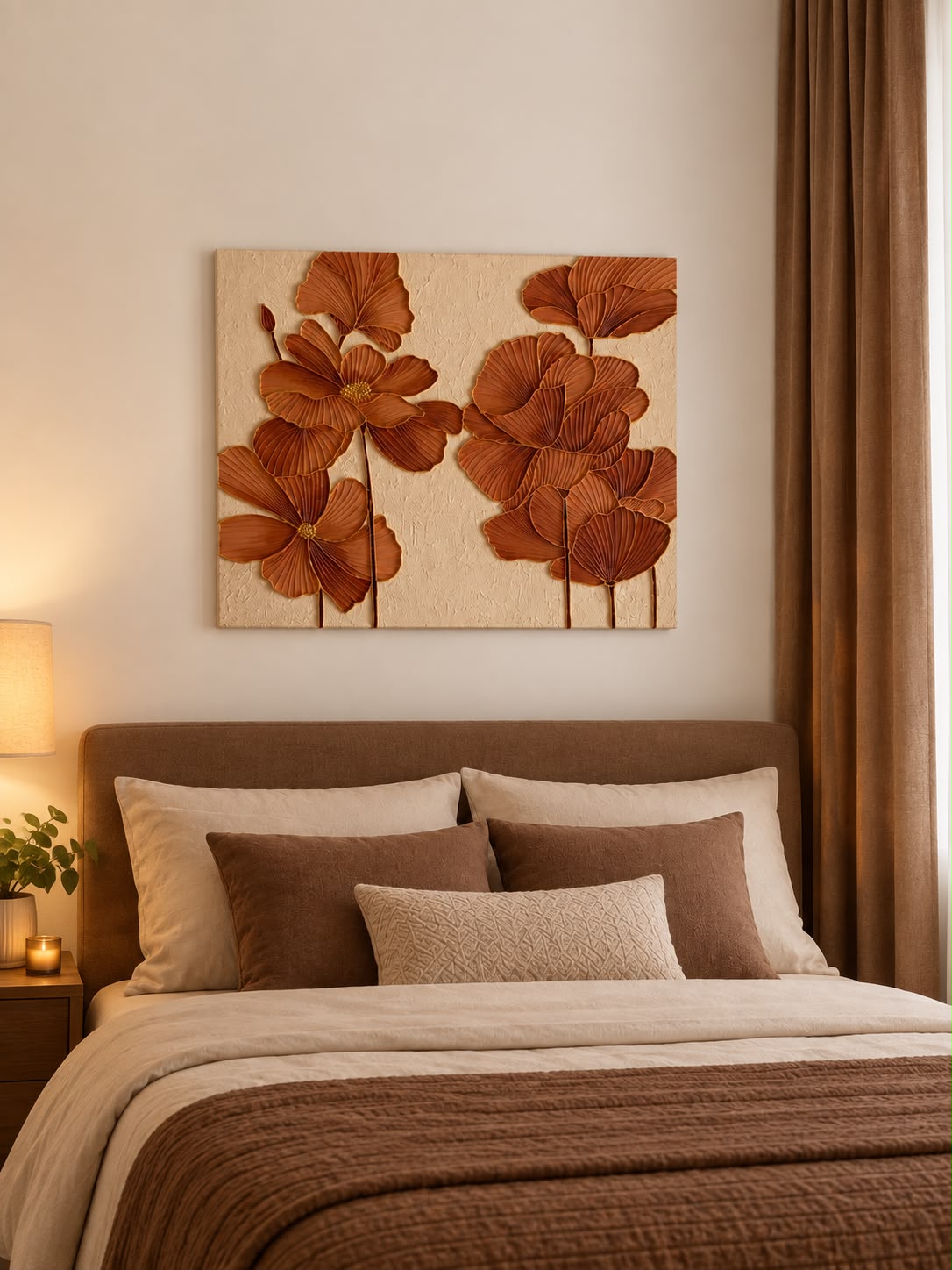
A surface with a story
Textured art invites a second look. From a distance, you see the composition. Up close, you discover ridges, edges, and the places where the artist has allowed the surface to remain imperfect. Those small variations give a painting a presence that a flat photograph cannot fully capture.
Built slowly, layer by layer
A textured composition begins with a plan for balance and movement. The artist builds areas of relief, allows materials to dry, and then brings colour into the surface. Some passages stay quiet while others catch the light. Patience matters: rushing a layer can change the finish of everything that follows.
Let the light do some of the work
Soft side lighting reveals shadows across raised details. Try a textured painting on a wall that receives indirect daylight, or near a gently angled lamp. The same work can feel calm at noon and wonderfully sculptural in the evening. You do not need a complicated display to appreciate that change.
Living with original texture
Dust gently and avoid rubbing, water, or household cleaners. Ask the artist for care instructions suited to the materials used in your piece. When moving a painting, protect the surface from pressure. A little care helps preserve the marks that make the work unique.